Te Taiawatea Moko-Painting
Ngāti Awa, Ngāti Porou, Tūhourangi (Te Arawa), Waikato
Tonganui Scholar 2025
Te Taiawatea’s emerging PhD will explore how land-based impacts affect the health of pāua (Haliotis iris) in Reporua (Aotearoa) and pā’ua (Tridacna maxima) in Rarotonga (Cook Islands), and how reconnecting Māori across Te Moana-nui-a-Kiwa through shared whakapapa and language can support climate-resilient futures for our taonga and communities.
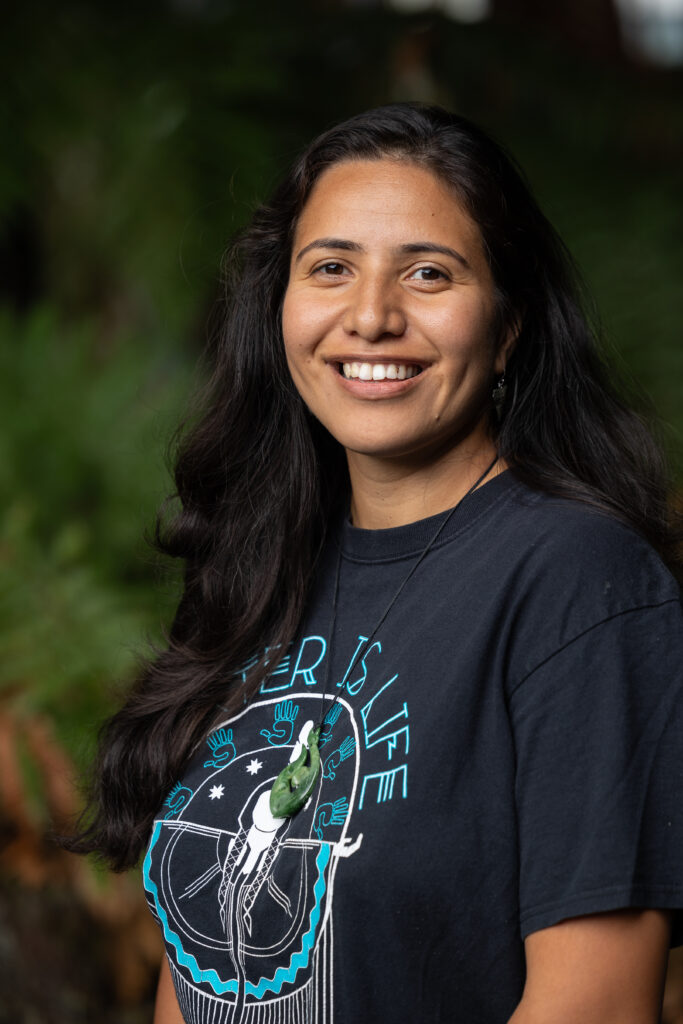
Te Taiawatea’s moemoeā…
This research asks:
1. What is the ecological and cultural state of pāua and pā’ua today?
2. How did two distinct species come to share a name, and what does this reveal about our knowledge systems?
3. How do current policies and customary governance shape their management?
4. What could future, climate-resilient systems look like?
This kaupapa was first endorsed at our Ngāti Rangi Marae AGM in 2022, and my journey has since been shaped by both whānau and whakapapa. After pausing for the births of my children, I returned to the project in 2024, and this year’s Pacific Climate Resilience Roadshow reminded me that my whakapapa extends beyond Aotearoa. With the guidance of supervisors Professor Kura Paul-Burke, Distinguished Professor Linda Tuhiwai Smith, and Dr Teina Rongo (Cook Islands), I am ready to take this work forward.
The vision is to restore and protect these taonga species by weaving together Indigenous knowledge and policy pathways. Through fieldwork in Reporua and Rarotonga, wānanga with communities, policy analysis, and exploration of language and naming, the research will connect ecological wellbeing with identity, food sovereignty, and intergenerational care.
Funding will support community-led fieldwork and engagement, ensuring knowledge holders are properly resourced. Ultimately, this kaupapa strengthens Pacific resilience by restoring relationships between people, language, and moana, recognising that the health of pāua and pā’ua reflects the health of us all.
Kaupapa update from Te Taiawatea
What were the major outcomes of this kaupapa?
Kai Moana, Kai Ora is a kaupapa Māori PhD research programme exploring how (re)claiming tino rangatiratanga over impacts on our moana enables our mokopuna to reconnect with and love mahinga kai. The research examines pāua (Haliotis iris) in Aotearoa and pā’ua (Tridacna maxima) in Kūki ‘Āirani. Two distinct taonga that share naming, reflecting our tīpuna’s knowledge systems as they navigated Te Moana-nui-a-Kiwa.
The research is grounded in Kaupapa Māori and Tivaevae methodologies, combining mātauranga Māori, marine science, and environmental policy analysis. It engages whakapapa connections between Ngāti Paoa (Aotearoa) and the Cook Islands, asking how ecological change, rāhui, rā’ui, and tikanga shape relationships with kai across generations.
Outcomes included:
- Established the foundations of Kai Moana, Kai Ora by dedicating time to developing the research, strengthening partnerships, and refining the project scope.
- Strengthened relationships with Ngāti Paoa and Kōrero o te ‘Ōrau (Cook Islands), ensuring the kaupapa is community-led and accountable to the people and moana it serves.
- Submitted a PhD application to Te Whare Wānanga o Awanuiārangi, progressing to the interview stage.
- Co-founded Kahu Awatea, providing the organisational home and infrastructure to deliver this kaupapa and future Indigenous environmental initiatives.
- Co-authored an academic article currently under peer review with Equity Review (Oxford University Press), extending the kaupapa into international academic scholarship.
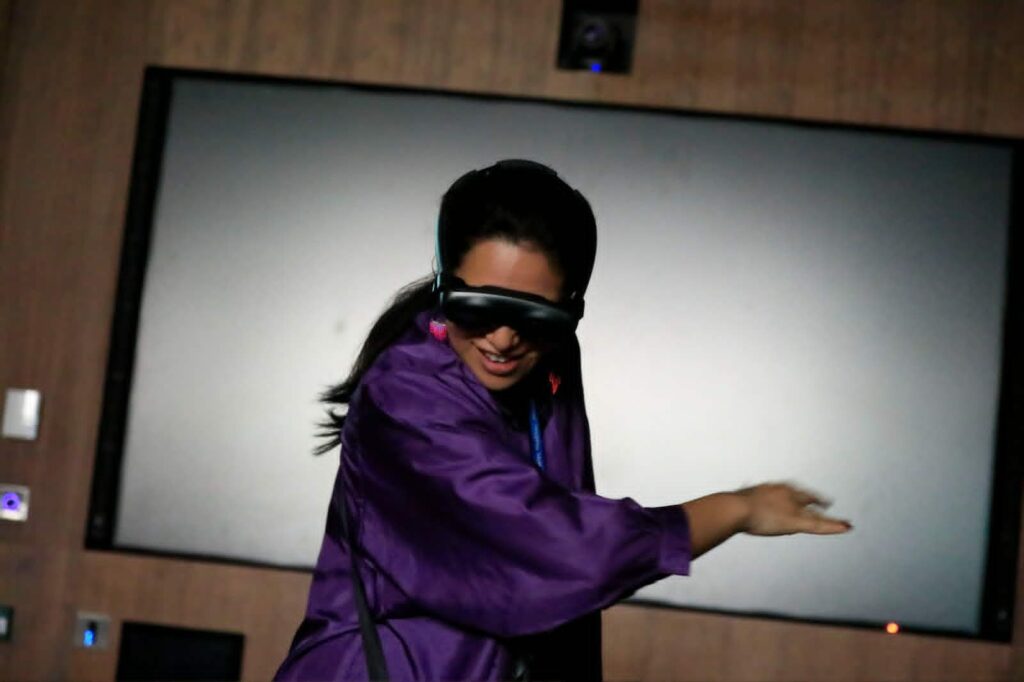
- Participated in the Atlantic Institute XR Lab residency, exploring how extended reality (XR) and immersive storytelling can communicate Indigenous knowledge, kai sovereignty and climate resilience.
- Had two abstracts accepted for presentation at the Reclaiming Indigenous Ecologies
of Love (RIEL) conference, creating opportunities to share this kaupapa with an international Indigenous research community.
What were some of the challenges your kaupapa faced during its implementation?
One of the biggest challenges was the time required to establish the foundations of the PhD. During this period, the supervisory team evolved, the research focus was refined, and the communities involved shifted to better reflect my whakapapa and the long-term aspirations of Kai Moana, Kai Ora. These changes strengthened the kaupapa but extended the timeframe for progressing the PhD application, which remains in process.
Another challenge has been the current funding environment. While the Tonganui Scholarship provided invaluable seed funding, it became clear that a kaupapa of this scale, spanning Aotearoa and the Cook Islands, community engagement, fieldwork and interdisciplinary research, will require significant additional investment. The scholarship was instrumental in creating the time and capacity to build strong relationships, establish the project’s foundations and position it for future funding opportunities.
How did this kaupapa benefit from the Tonganui Scholarship?
The Tonganui Scholarship provided the time and capacity to develop Kai Moana, Kai Ora in a way that was relational, community-led and grounded in whakapapa. Rather than rushing into fieldwork, the funding enabled me to strengthen relationships with Ngāti Paoa and Kōrero o te ‘Ōrau, refine the kaupapa alongside community aspirations, establish Kahu Awatea as the organisational home for the project, progress my PhD application, and explore innovative storytelling through extended reality (XR). Although the scholarship represents seed funding for a much larger research programme, it laid the foundations needed to ensure the kaupapa can grow with integrity and remain accountable to the communities it serves.
What are your future plans for this kaupapa?
Kai Moana, Kai Ora was always envisioned as a long-term kaupapa rather than a standalone project. My immediate goal is to commence my PhD at Te Whare Wānanga o Awanuiārangi and continue this research alongside Ngāti Paoa and Kōrero o te ‘Ōrau. Over time, I hope to undertake community-led fieldwork in Aotearoa and the Cook Islands, strengthen Indigenous approaches to ocean governance, and explore innovative ways of sharing these stories through research, policy and extended reality (XR).
Ultimately, my hope is that Kai Moana, Kai Ora contributes to restoring relationships between people, language and moana, recognising that the health of pāua and pā’ua reflects the health of our communities. I also hope the kaupapa inspires future generations to see Indigenous knowledge, whakapapa and tikanga as essential foundations for climate resilience and the protection of our oceans.