Maioha Haimona-Ngawharau and Māia Lockyer
Ngāti Ranginui
Pou Herenga Tangata Awardee 2025
We have created an initiative called Haumanu Hauora, which seeks to bridge the gap between medical knowledge and patient understanding, ultimately improving adherence to treatment and empowering whānau to take charge of their health.
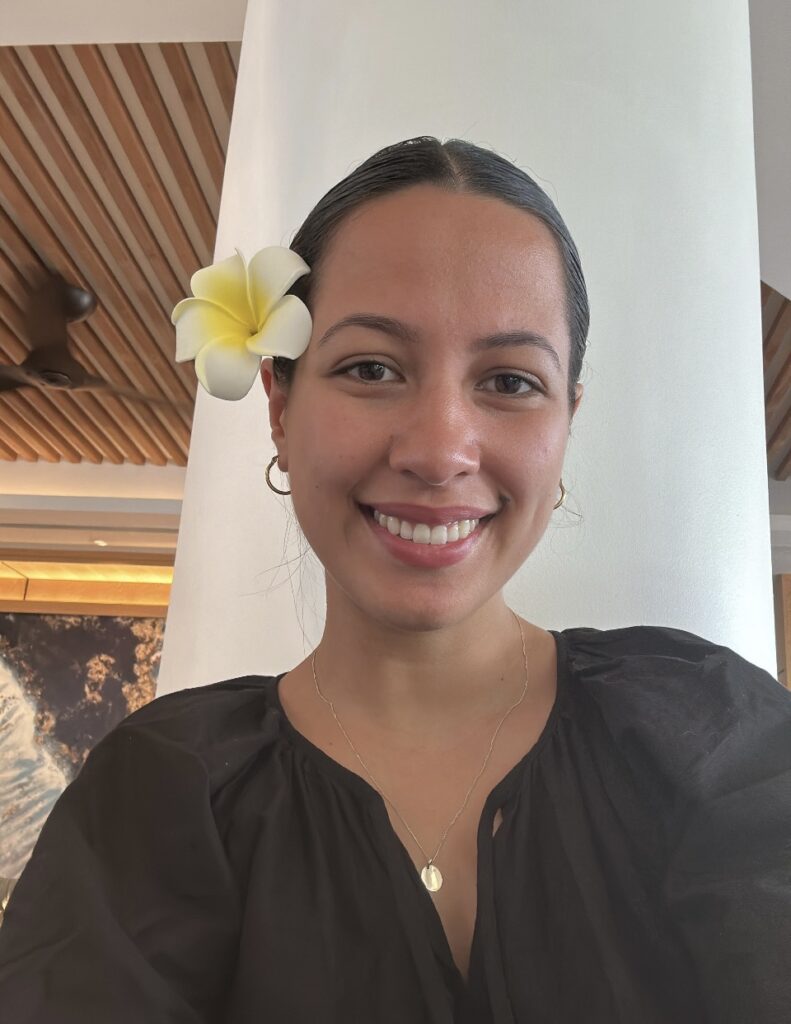 Maioha’s moemoeā…
As fourth-year Māori medical students, we are committed to using our knowledge and skills to give back to our communities.
We recognised that many patients leave clinical encounters feeling confused or overwhelmed by complex medical terminology. This confusion contributes to poorer health outcomes, particularly for Māori, who already experience inequities in access and outcomes within the healthcare system. Haumanu Hauora was developed as a practical response to this challenge.
Our kaupapa harnesses the power of social media, one of today’s most influential platforms for shaping culture and knowledge. By producing and releasing free health literacy resources, we aim to break down the physiology and pathology of common conditions, demystify clinical language, and provide practical tools for navigating the healthcare system. At present, there are very few content creators in this space, and we see this as both a responsibility and an opportunity. If our people are already engaging with social media daily, then we must meet them where they are.
Our dream is to grow Haumanu Hauora beyond online platforms, extending into wānanga at marae and kura across the motu. In doing so, we can weave together the accessibility of digital media with the strength of kanohi ki te kanohi learning, ensuring that health knowledge is shared in culturally resonant, community-centred ways.
Through this initiative we hope to transform health literacy, not as an abstract concept, but as a lived reality for whānau. Haumanu Hauora represents our belief that knowledge is most powerful when it is shared, accessible, and used to uplift the hauora of all our people.
Kaupapa update from Maioha
What were the major outcomes of this kaupapa?
Since receiving this funding, my journey has really shifted from Haumanu Hauora towards my own leadership development, and I’ve been able to achieve some milestones I’m really proud of. I attended the NZMSA conference and, for the first time, Wānanga a Tau, the national Māori medical students’ conference. Both of these were hugely influential in my learning and in guiding my career direction, especially as I near the end of my studies. Being in those spaces has inspired and motivated me to pursue a career in hauora Māori, specifically working towards becoming a GP.
At the NZMSA conference, I ran a te reo Māori workshop for around 50 medical students from around the motu. It was an interactive, evidence-based session, and being able to deliver something of that scale and see the engagement from students across the country was a real highlight for me.
I also had the opportunity to meet some renowned Māori working in medicine, including Dr Timoti Te Moke, author of the bestselling book The Unlikely Doctor, Dr Rawiri Jansen, Māori GP and activist, Dr Katarina Kirikino, another Māori GP, and Dr Arihia Waaka, anaesthetist and kaihaka for Ngāti Whakaue. Being around people like this, who are living proof of what’s possible, has been really grounding and motivating for where I want to take my own career.
How did this kaupapa benefit from the Pou Herenga Tangata Award?
The funding made it possible for me to say yes to opportunities I otherwise couldn’t have managed as a student, including getting home for my pāpā’s tangi at a time of real financial stress for my whānau. I’ve assessed the benefit less through numbers and more through what’s shifted in me, my confidence teaching and speaking in Māori spaces, the strength of the relationships I’ve built with other Māori medical students and doctors nationally, and how quickly I moved from attending my first Wānanga a Tau to running my own workshop within the same year.
What are your future plans for this kaupapa?
I already have Wānanga a Tau, the GP conference, and Kura Reo lined up over the coming months, along with Hui a Tau in September. I’m also hoping to attend PRIDoC in Taiwan later this year if my budget allows, and I think this would be one of the biggest opportunities for my leadership development yet. PRIDoC brings together Indigenous doctors, health professionals, and students from right across the Pacific region, which would let me learn from Indigenous health leadership on a much wider scale than I’ve been exposed to so far.
Up until now, most of my learning has come from Māori spaces here at home, so being able to sit alongside Indigenous colleagues from other countries facing similar health inequities would give me a broader understanding of how Indigenous led healthcare and leadership can look in different contexts. It would also be a chance to represent Aotearoa and take part in an international Indigenous health network, something that could open up long term connections and collaboration well beyond the conference itself. My hope is that this kind of exposure keeps shaping me into a well rounded leader, one who understands hauora Māori not in isolation, but as part of a much bigger picture of Indigenous health and self determination globally.
Longer term, my dream is to carry everything I’ve learned this year into my career as a GP in hauora Māori, staying connected to these networks well beyond graduation and using whatever platform I have to support the next group of Māori medical students coming through.