Kelly Klink
Ngāti Wai
Te Ngake o te Kūpenga Funding Recipient 2025
I’m currently writing children’s books giving tamariki stories that remind them: the ocean is not just water. It’s whakapapa. Our ancestor. Our teacher.
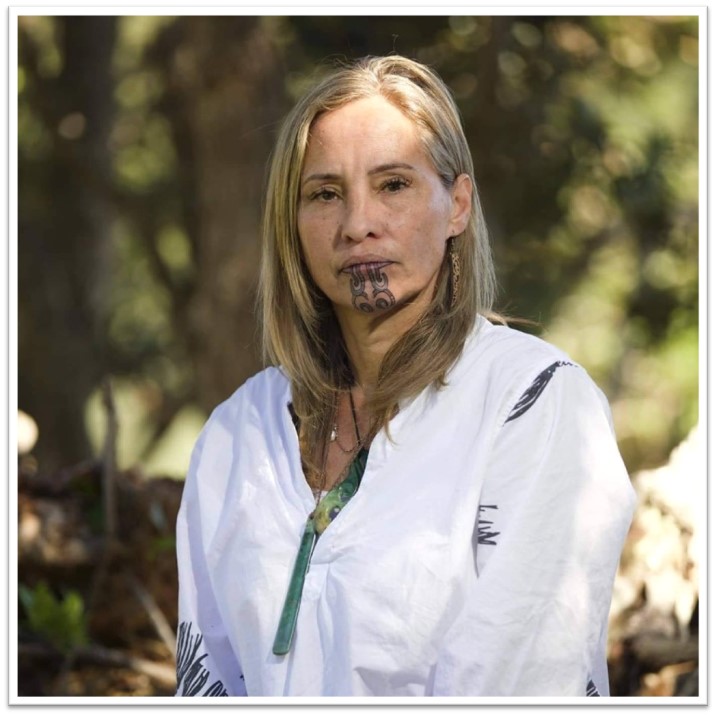 Kelly’s moemoeā…
When I wrote my PhD, the moana was my greatest teacher. Not the libraries, not the archives, but the tides, the winds, the silence you feel when you drop below the surface. I remember one day, diving out from Aotea the kelp forest had been stripped back by kina. It was bare, almost lifeless. And as I floated there, watching the emptiness, I realised this is what colonisation looks like in the ocean. When balance is lost, everything suffers. That moment taught me more than any academic text could.
But the moana also teaches hope. I’ve seen places where restoration work is happening; where we replant kelp, where we give Tangaroa space to heal and the life comes back. Fish return, birds feed again, the whole system begins to breathe. That’s when I understood that resistance is not only saying no. It’s also about restoring, creating, giving life back.
These are the kinds of lessons I want our tamariki to inherit. That’s why I write children’s books. So when they sit with a story, they feel that same truth; that the moana is alive, that it speaks, that it can guide them just as it guided me.
The Tonganui Scholarship will give me the resources to take this vision further. It will help me expand our restoration work on Aotea, creating more training and diving opportunities for rangatahi. It will support the writing and publishing of our bilingual children’s books, so more tamariki can grow up with these pūrākau in their hands. It will also enable me to walk alongside kaumātua in cultural reconnection journeys; strengthening those whakapapa ties across Te Moananui-a-Kiwa that give meaning to all our work.
Most of all, it will give me the capacity to bring these threads together, ecological restoration, cultural renewal and intergenerational learning; so our people, our moana, and our stories continue to thrive.
Kaupapa update from Kelly
What were the major outcomes of this kaupapa?
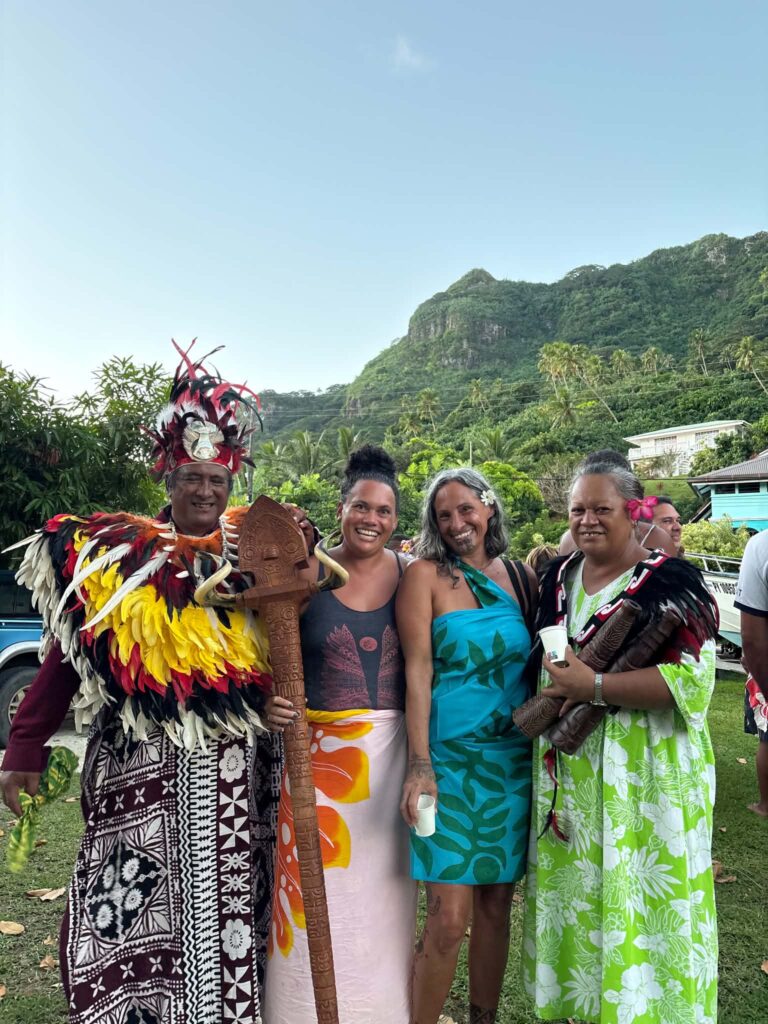
This kaupapa centres on a series of bilingual children’s books grounded in the oral histories and korero tuku iho of our tupuna, connecting tamariki to the ancestral landscape of Aotea and the whakapapa threads that reach back across Te Moananui-a-Kiwa. Several books in the series trace the stories of Toi te Huatahi and the Tainui waka, requiring deep research into ma’ohi oral history and Eastern Pacific heritage sources. Three books are now completed; two more are written and awaiting illustrations. The research undertaken also produced a peer-reviewed scholarly article examining the singular-origin framing of Taputapuatea and what that history means for how Eastern Pacific peoples understand and tell their own stories.
Since receiving the Te Ngake o Te Kupenga grant, I have completed research into Eastern Pacific ancestral oral histories and heritage sources relating to Ra’iātea, including ma’ohi kōrero connected to our waka Tainui and the ancestral figure Toi te Huatahi. This research directly informed the content, pūrākau, and narrative foundations of those books in the series that trace our whakapapa back across Te Moananui-a-Kiwa. Three bilingual children’s books are now fully completed. A further two books are written and awaiting illustrations.
What were some of the challenges your kaupapa faced during its implementation?
One of the central challenges of this kaupapa is the work of translation, not simply between languages, but between worlds. Bringing ancestral pūrākau into a form that is accessible to tamariki while preserving the depth, the whakapapa relationships, and the mātauranga embedded in those stories requires careful and sustained attention. There is a real risk of flattening or simplifying what is layered and complex. I have worked to hold that tension carefully, ensuring the books speak to children while remaining true to the kōrero of the tūpuna.
The geographical distance between Aotea and French Polynesia also presented logistical challenges for the research phase, as key source material relating to Ra’iātea and ma’ohi oral history is held in archives and community repositories in French Polynesia.
How did this kaupapa benefit from the Te Ngake o Te Kūpenga Grant?
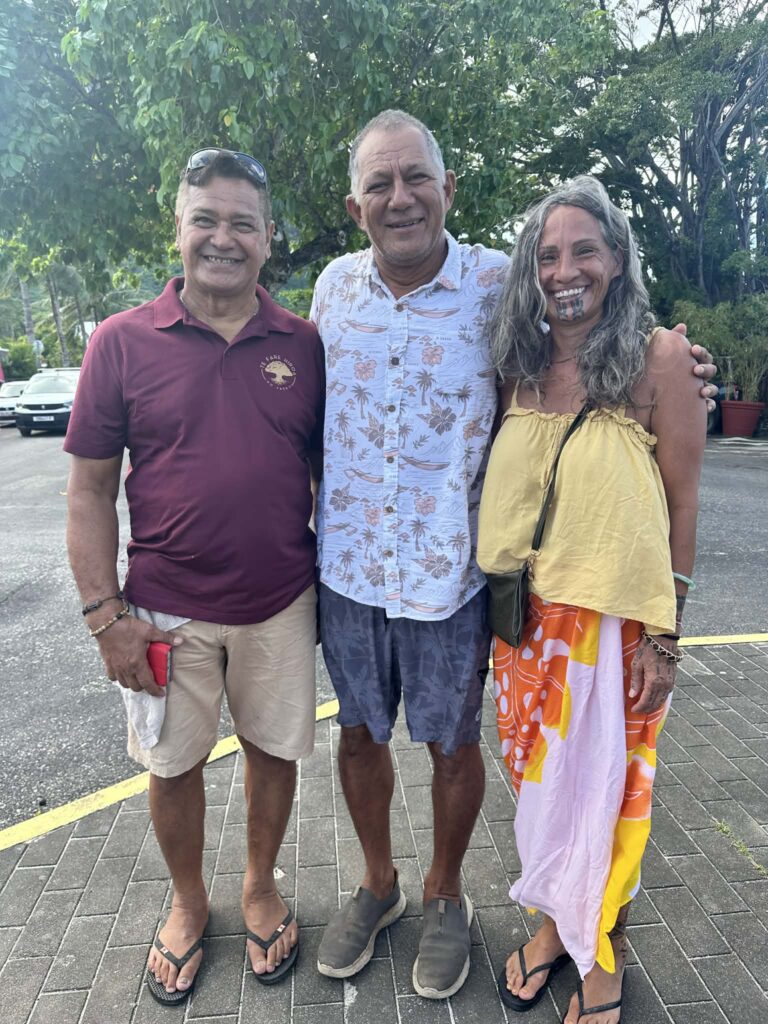 The funding enabled me to access and work with this material in ways that would not otherwise have been possible. The funding covered research and writing costs including access to Eastern Pacific heritage sources and material connected to French Polynesia, which underpins the authenticity and depth of the pūrākau in the books and the evidentiary base of the scholarly article. Without this support, the research phase would not have been possible at the scale required. The grant gave me the time and resources to go deeply into the material, to follow the whakapapa through the sources rather than work around the gaps.
What are your future plans for this kaupapa?
The books and the article are part of a larger vision, one that brings together the restoration of reo, the recovery of ancestral pūrākau, and the critical examination of how Eastern Pacific history has been shaped and contested. My hope is to see the books reach tamariki not only on Aotea but across Ngāti Rehua communities and Eastern Pacific communities who share our whakapapa, used in kura, in kōhanga reo, and in the homes of whānau raising their children in the reo and in the stories of the tūpuna.
The scholarly article opens into further research I am developing on the whakapapa connections between Ngāti Rehua and our Eastern Pacific origins, which I intend to build into ongoing academic and community-facing work. Woven through all of it is the aspiration to deepen our understanding of where we come from, and to ensure that mātauranga tuku iho continues to guide how we tell those histories, for our rangatahi and for the generations that follow them.