Haimona Brown
Ngāi Takoto, Ngāi Te Rangi, Ngāti Rangiwewehi (Te Arawa), Ngāti Whakaue (Te Arawa), Te Aupōuri
Tonganui Scholar 2025
Through his kaupapa Ngā Niao o te Kaituna, Haimona will work to reconnect rangatahi with wai and moana.
Haimona’s moemoeā…
Ko Haimona Brown tōku ingoa. He uri ahau nō Te Arawa, Te Āti Awa, Tainui me Te Aupōuri. I was raised in Te Kao at the tail of Te Ika-a-Māui, where the moana shaped my identity. My father was a fisherman, and the Kaumatua and Kuia of Te Kao were my first teachers, showing me that the moana is a tūpuna — a living ancestor who sustains us.
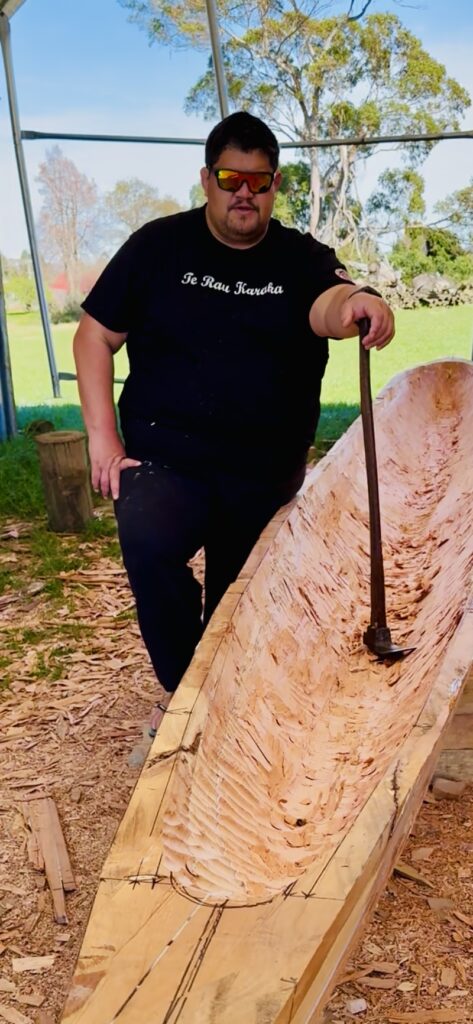
Today I carry that connection as both an ocean explorer onboard Te Aurere waka and a waka builder, following the teachings of Sir Hekenukumai Busby. My mahi weaves mātauranga tuku iho with contemporary practice, ensuring the voices of our tūpuna remain alive while addressing the needs of our people and environment.
Through Ngā Niao o te Kaituna, I work to reconnect rangatahi with wai and moana. With the support of this scholarship, our kaupapa will:
– Refurbish a 16-man waka tētē, involving rangatahi in every stage of the work.
– Record the kōrero of Kaumatua, preserving stories and wisdom of Kaituna, Tapuika, and Te Arawa.
– Strengthen iwi relationships, recognising the century-long ties between Ngāti Rangiwewehi and Tapuika in caring for our waterways.
The outcomes will be both practical and visionary. A waka will be restored as a living vessel of learning, rangatahi will gain skills and confidence as kaitiaki, and Kaumatua wisdom will be protected for future generations. This kaupapa reflects the principle that if the river is healthy, the people are healthy.
Ngā Niao o te Kaituna also contributes to the wider oceans sector. Through waka, rangatahi learn to read tides, winds, and rhythms of the moana, while developing a deep understanding of kaitiakitanga. This equips them to lead with integrity in both cultural and environmental spaces.
The Tonganui Scholarship will provide the resources to bring this dream forward. By supporting waka, rangatahi, and Kaumatua, it will help ensure our culture and our environment remain strong together, leaving a legacy for generations to come.
Kaupapa update from Haimona
What were the major outcomes of this kaupapa?
Ngā Niao o te Kaituna is a kaupapa that reconnects rangatahi with their culture, the moana, and matauranga Māori through waka restoration, traditional knowledge, and hands-on learning. Guided by kaumātua and experienced waka builders, rangatahi helped refurbish a 16-man Waka Tētē while learning tikanga, whakapapa, and the responsibilities of kaitiakitanga. The kaupapa will also record the stories and wisdom of kaumātua, preserving this knowledge for future generations. By bringing together people, culture, and the environment, Ngā Niao o te Kaituna strengthens identity, leadership, and resilience, ensuring our ancestral knowledge continues to guide future generations.
What were some of the challenges your kaupapa faced during its implementation?
The 16-man Waka Tētē was a lot more complicated to fix up and took a lot more time due to rotten pieces and the scale of the project was a lot larger then anticipated however waka refurbishment is finished and standing by for official launch date. Other challenges included:
- A big barrier was the re enrollment of rangatahi and schooling policy and processes. Rangatahi involvement after the annual holiday period could be difficult because we have to re teach the values of waka kaupapa to new tauira.
- Māori Maramataka Practices conflicts with the Gregorian Calendar and when connecting to the Taiao it is difficult because the timing of Māori Practices is comprised because it does not align to mother nature’s natural flow.
- The diversity of ages acquires more time, work and dedication.
- Health and safety policies restrict rangatahi from more advanced construction
methods. - Waka building techniques too advanced for rangatahi and public so a lot of patience is required and time allocated to meet needs.
How did this kaupapa benefit from the Tonganui Scholarship?
The funding supported rangatahi to participate in hands-on learning alongside kaumātua and experienced waka builders. It also supported the recording of kaumātua kōrero, ensuring important cultural knowledge is preserved for future generations. Beyond the physical outcomes, the funding strengthened connections between rangatahi, whānau, and iwi, building confidence, leadership, and a deeper understanding of kaitiakitanga.
What are your future plans for this kaupapa?
Ngā Niao o te Kaituna is intended to be a long-term kaupapa that continues to grow. My hope is to see more rangatahi reconnect with the moana through waka building, mātauranga Māori, and kaitiakitanga, while ensuring the knowledge of our tūpuna is preserved and shared. In time, I hope this kaupapa will inspire other communities to revitalise their own waka traditions, strengthen cultural identity, and develop future Māori leaders who will care for our waterways, oceans, and environment for generations to come.
Ngā Niao o Te Kaituna is the only waka wananga of its kind running today in New Zealand and needs to be supported so that the culture of waka can thrive especially in these times as we navigate into the future.